
Research
Weekly Research Stack 2: Robinhood Takes Perps Mainstream, Blast Shuts Down After Its $2B Boom
Contributors
David Abimbola, Modestus Okoye
Robinhood Crypto Perps Come Onshore
According to CEO Vlad Tenev, Robinhood plans to roll out crypto perpetual futures to eligible US traders in the coming months, starting with BTC, ETH, SOL, XRP, DOGE, ADA, LINK and HYPE. Traders will get up to 10x leverage on BTC and ETH and up to 3x on the other assets.
This move pushes Robinhood further into the growing race for US crypto derivatives traders. Kraken already offers regulated crypto perps in the US, while Coinbase continues to expand its derivatives business. Hyperliquid is also looking for a route into the market through a regulated structure.
Robinhood does have one big advantage: it already has the users. The company reported 28.6 million funded customers in August, and those users will not need to leave the platform to trade perps. They can do it alongside stocks, options, futures, crypto, and prediction markets already available on Robinhood.
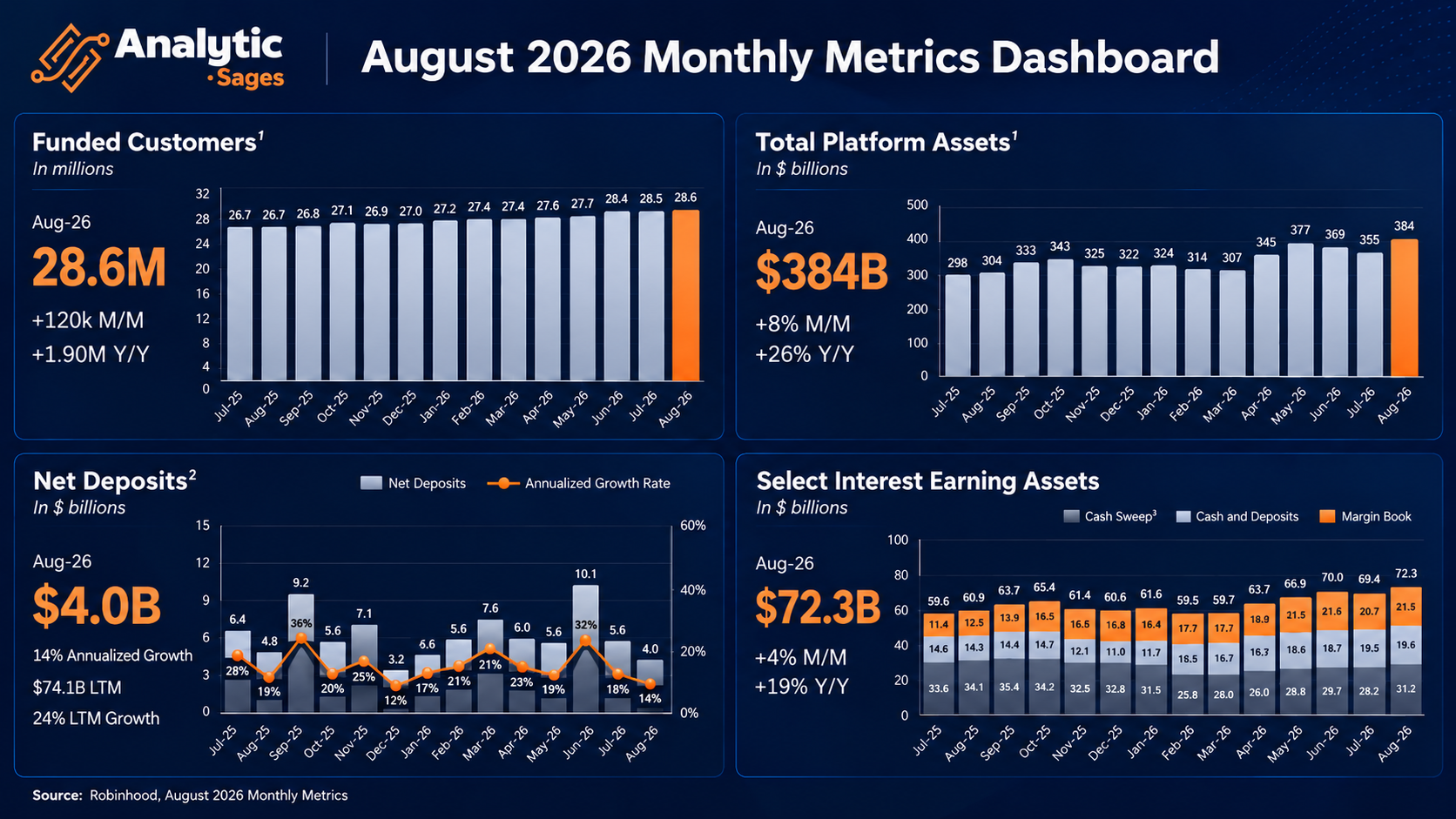
Robinhood plans to charge 0.01% per perp trade through the end of the year, adding another transaction-based revenue stream as the business continues to grow. In Q2, revenue rose 32% YoY to a record $1.31 billion.
Blast's $2B Boom Ends in a Shutdown
Last week, Blast announced plans to shut down its L2 after admitting that the chain now costs more to run than it generates in revenue.
The team says it no longer sees a credible path to making the network economically sustainable, giving users until October 26 to withdraw through the normal Blast interface.
Honestly, it is a sharp ending for a chain that once attracted more than $2 billion in TVL.
In 2024, Blast gained significant traction after pulling in over $1 billion even before its mainnet launched, helped by native yield, points, and expectations around its eventual airdrop. At its peak, TVL climbed above $2.2 billion. Today, only about $32 million remains, a decline of more than 98%.
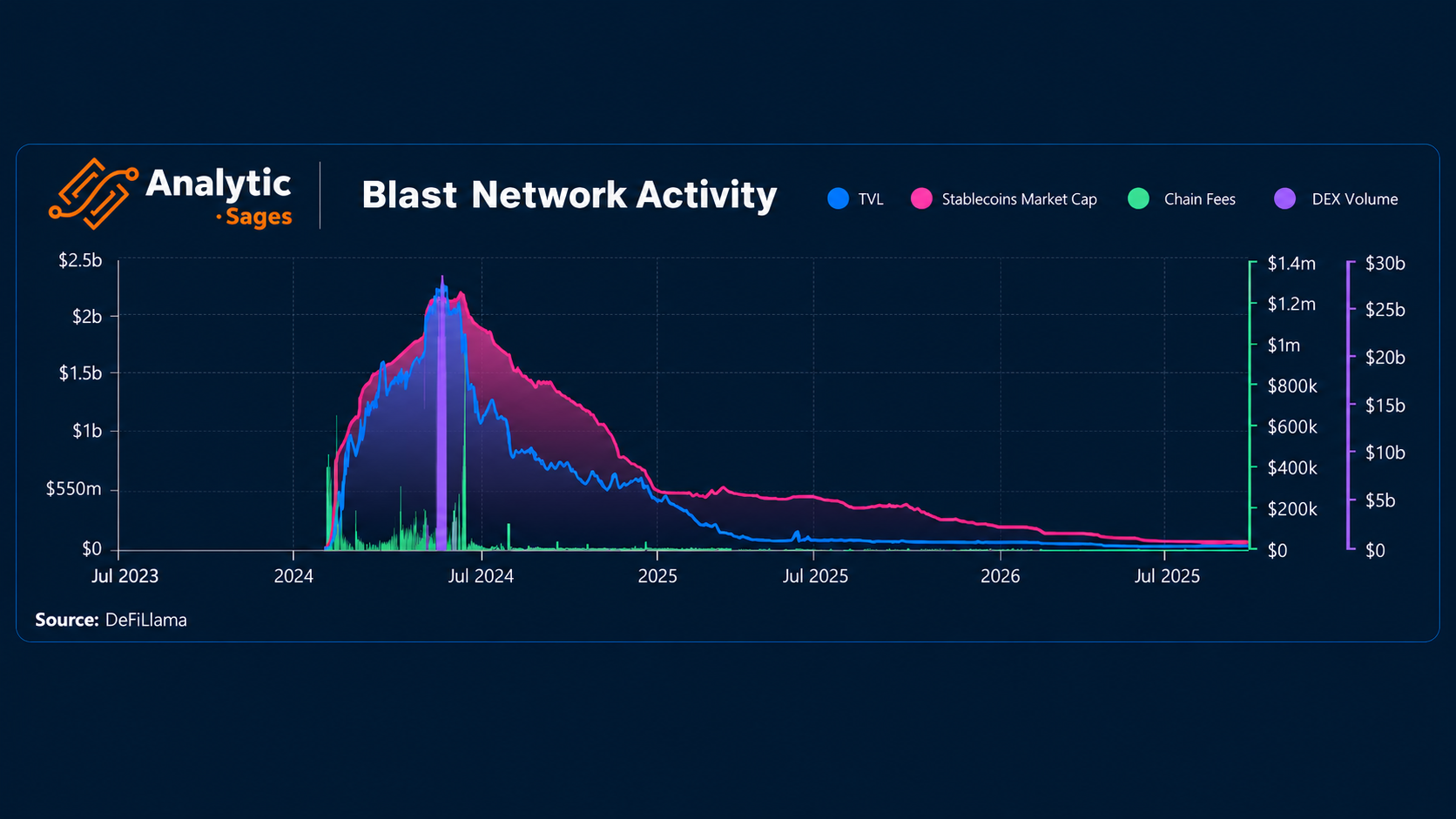
The decline extends beyond TVL. Stablecoin market cap has fallen sharply from its 2024 highs, while DEX volume has dropped from an average of roughly $52 million per day in Q2 2024 to only tens of thousands of dollars recently. Fees and revenue followed suit, falling from millions of dollars during Blast's peak to tiny daily amounts.
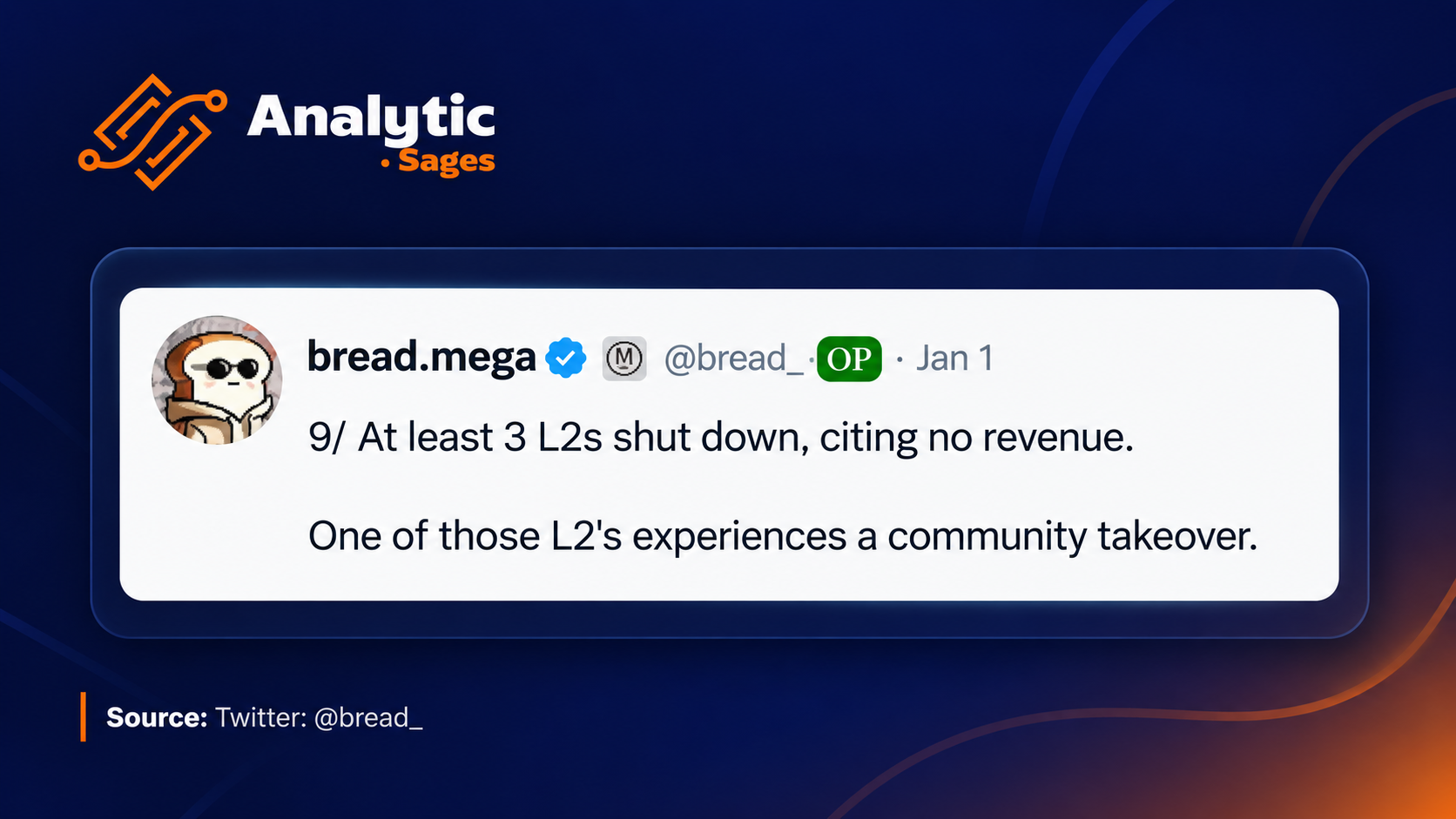
This brings to mind one of 0xBread's predictions for 2026. At the start of the year, he wrote that at least three L2s would shut down, citing a lack of revenue, with one eventually going through a community takeover. We have already seen Kinto and Treasure wind down, and now Blast is joining that list.
If that prediction is worth watching, Blast's shutdown puts even more attention on low-activity L2s. Scroll now sees only a fraction of the activity it had around its airdrop period, while Movement's TVL has fallen from more than $250 million at launch to less than $3 million.
Neither has announced plans to shut down, but the pattern is becoming harder to ignore.
Balancer Set to Shut Down Following Approval From Holders
Balancer holders have voted to wind the protocol down after months of weak economics and falling activity. More than 99% of the voting power backed BIP-928, which starts an orderly shutdown and eventually distributes the remaining treasury to BAL holders.
This decision did not come out of nowhere.
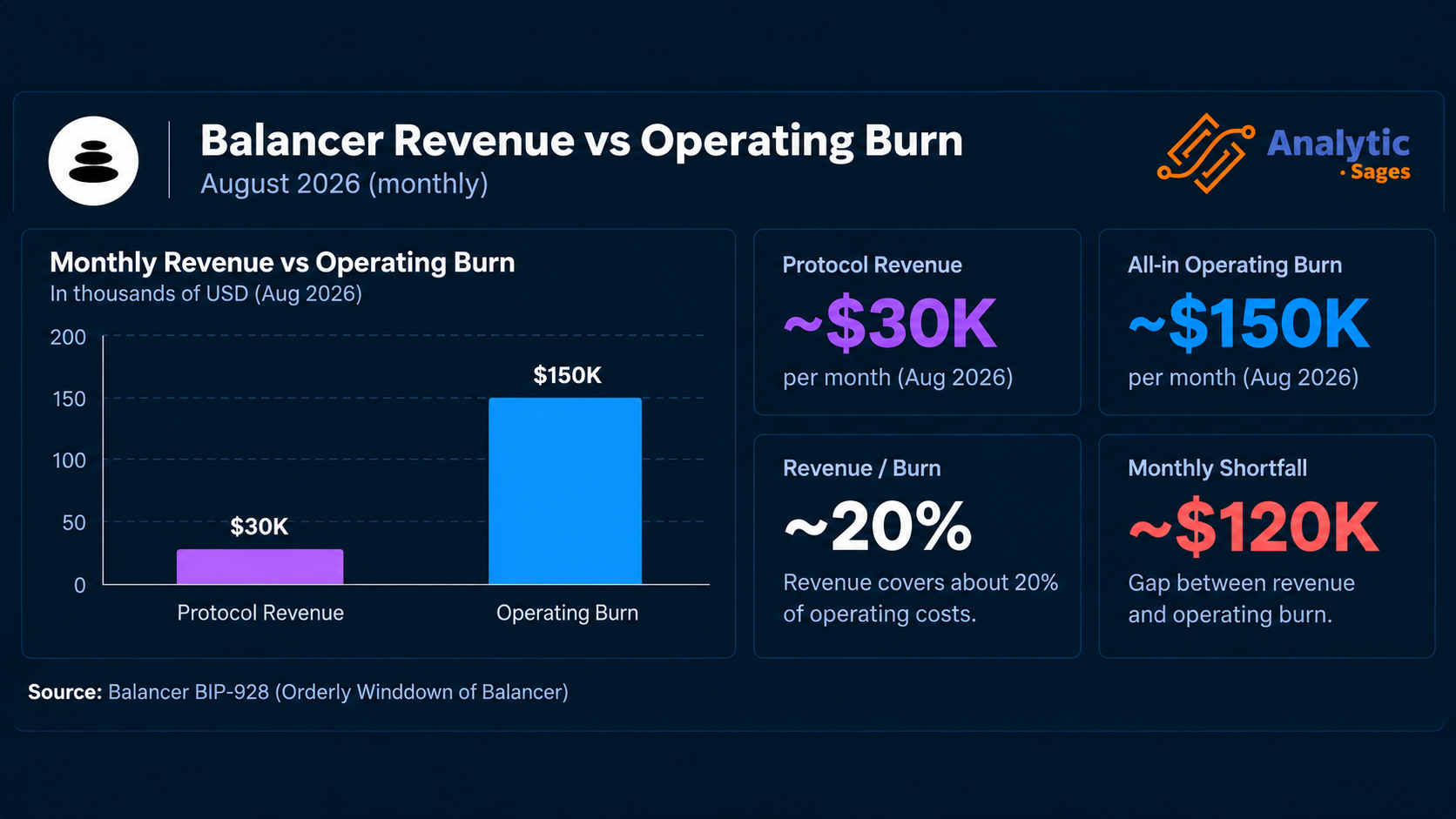
In August, Balancer was already bringing in only about $30,000 in monthly revenue against roughly $150,000 in operating costs. BAL has also had a rough year, falling about 77% since January.
BAL holders were also given another option. BIP-929 proposed carrying the technology forward under a new name, but that plan failed to pass. The community instead chose to wind things down and return the remaining value rather than fund another revival attempt.
LPs can continue withdrawing, while BAL holders are expected to receive a pro-rata share of the remaining treasury once the wind-down reaches that stage.
Authors and contributors
David Abimbola
Research Analyst · Author
Modestus Okoye
Research Lead · Editor